The Portrayal of Gender and Emotion in Cligés
Authors: Mary Herdelin, Katheryn Livingston, and Umut Turk
The Middle Ages have been characterized by some historians as “The Dark Ages.” This concept originated from the idea that civilization stood still after the fall of the Roman Empire until the famous fifteenth century Renaissance. However, since the early nineteenth century, medievalists have focused on redefining and illuminating the period previously known as “The Dark Ages.” This has included finding the origins of the fifteenth-century Renaissance and the similarities and continuities of modern civilization and its twelfth-century predecessors. The progenitor of this American intellectual movement is Charles H. Haskins who first labeled the twelfth century as a “Renaissance,” ironically appropriating the term which often painted the very period as dark and unintellectual (Vaughn,169-84; Jaeger,1151-83). Haskins inspired globally generations of medievalists to research the positive similarities between the twelfth century and other periods that historians so admired. One such historian was Sir Richard William Southern, who relied on the changing literary conventions as the basis for his historical claim which surrounded a shift “From Epic to Romance” (Southern). Over four chapters, he presented how life and society were structured and how this shifted during the twelfth century. His final chapter, however, shifted and connected the argument back to the concept of the transition “From Epic to Romance,” which characterized this transformation which he used to justify his claims surrounding the development of more complex emotions in Romances as representing a greater understanding of the human psyche or as he called it, the “self” (Southern; Enders). The basis of his work was literature and this research project followed suit. However, the study of this period has shifted more and more over time to represent more marginalized voices. These voices have re-introduced some darkness into the Middle Ages by highlighting the origins of discrimination such as sexism, antisemitism, and xenophobia. These authors see the value in studying the period as being based, not only in its positive intellectual contributions, but also on its negative contributions to the ills of modern society. The scope of medieval studies has moved to include more marginalized voices and focuses (Moore, 1-65). This research project attempts to fit into this category which sees value in the period for its wealth of intellectual progress, but also its nuances as a product of a sexist society. Through our research, we aimed to illuminate and complicate Southern’s claim that Romances reveal progress in the development of the self by adding the lens of gender. While it is true that twelfth century Romances include more complex emotions, the development of self is carried out differently for characters of different genders. This drastically changes the means by which the moral of a story is relayed to an audience.
General Tools
This research project is a synthesis of old analytical methods and digital analysis used to analyze one epic, Song of Roland, and one Romance, Cligés. Much of the intellectual contributions to medieval studies have relied on what is known as close readings, which use close examinations of the language to draw conclusions (Enders, 14). These come from a variety of areas of study ranging from history to philosophy. Close reading analysis from trained intellectuals reveals what claims have been made about the Cligés and Song of Roland, and shaped the course this research took. An example is that on an initial reading from an untrained eye, one may not understand that Cligés is satirizing Epics as a genre, and even explicitly makes references to Song of Roland (Lloyd, 257-280). This research project adds the layer of a “distant reading” to the current literature through digital tools that can give quantitative information about a piece.
Entering into the distant reading of Song of Roland and Cligés, the hypothesis was that the differences in the pieces would represent the changes over time in the treatment of emotions, women, and moral lessons. The tools to examine the texts as wholes have the ability to reveal data surrounding the associations of words, the dispersion of significant words, and the emotional overtone. The first tool available for this work was the “most frequent words” tool, which, as its name implies, ranked the words by their frequency and created a graphic of the most recurrent words in the texts. These words guided the choice of words used in further tools as it suggested the major themes and characters. In Song of Roland for example, Charles and Roland are two of the most frequently used words. Other important words aside from names are those relating to battle such as “valiant”, “dead”, “knights”, and “shield”. For Cligés, the words that were most prominent, not including character names, were related to emotions including fear, desire, joy, think, long, need, grief, and especially love. While this tool confirmed the premise, it did not change the experience of the book much from the close-reading. Tools such as concordances and collocates are more effective for extracting meaning from a distant scale and this new distant reading data.
Concordance finds what words are found around a given word. When applied to “love” in Song of Roland, frequent words that follow it are “loyalty”, “honor”, “friend”, and “him”. All of these represent the male-centric relationships featured in the text. However, this does reveal a new level of confirmation surrounding the extent to which this was related to love. In Cligés on the other hand, along with having three times as many instances in which “love” is used, the words are more complicated. Some relate to emotions of longing and even reveal the numerous instances in which there are professions of love. However, this tool is still hard to extract new data from and really only confirms the hypothesis that Romances had more complicated feelings about love.
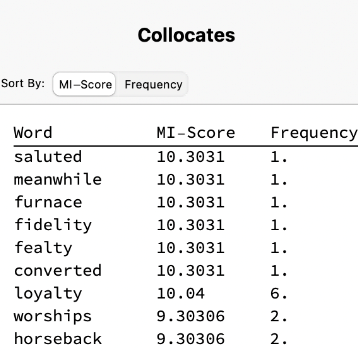
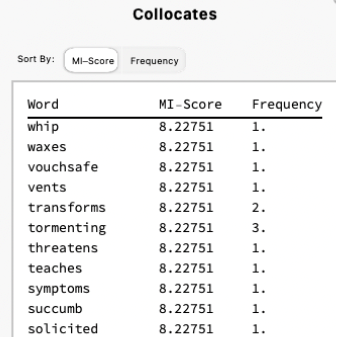
Collocates, on the other hand, can reveal the words associated with a given word such as “love.” This is clearly significant to both stories. In Song of Roland, love’s top ten word collocates are “saluted”, “meanwhile”, “furnace”, “fidelity”, “fealty”, “converted”, “loyalty”, “worships”, and “horseback”, while Cligés’s are “whip”, “waxes”, “vouchsafe”, “vents”, “transforms”, “tormenting”, “threatens”, “symptoms”, “succumb”, and “solicited” (see Figures 1 and 2). These words overall speak to the understanding of love evolving to be multidimensional in literature as time went on. The suffering caused by love in Cligés speaks to this. However, another marked difference over time is the inclusion of women. A more complex conception of love and increased inclusion of women are positively associated. However, another tool revealed that in Cligés, themes of love and war existed but as almost separate plots.
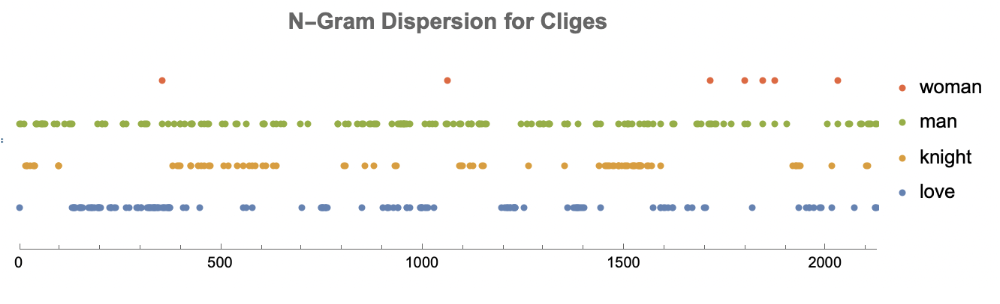
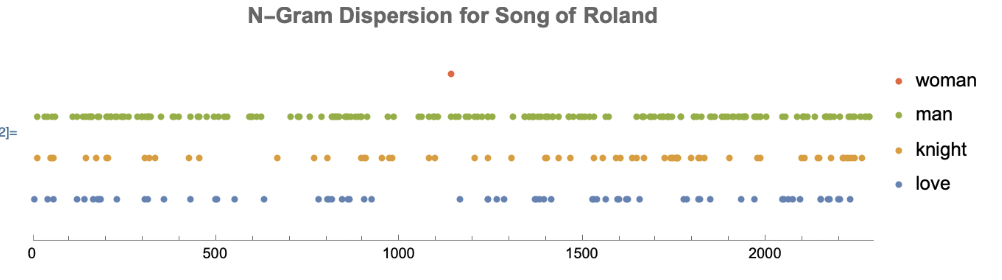
Dispersion plots reveal where words occur on a line graph. A dispersion plot showing “woman, man, love, and knight” in both stories shows that while love is interspersed throughout and along with knights in Song of Roland, in Cligés, they are distinctly separate (see Figures 3 and 4). This can be attributed to the possible need to cater to the long-standing tradition of war stories while also appealing to new audiences, but further research could address this topic more directly. The reason this is significant to our work is that in Song of Roland, love is seen as a shared bond between men fighting for good, whereas in Cligés, love is separate from the fight for good (McCracken, 6-18). Women in this way could even represent evil.
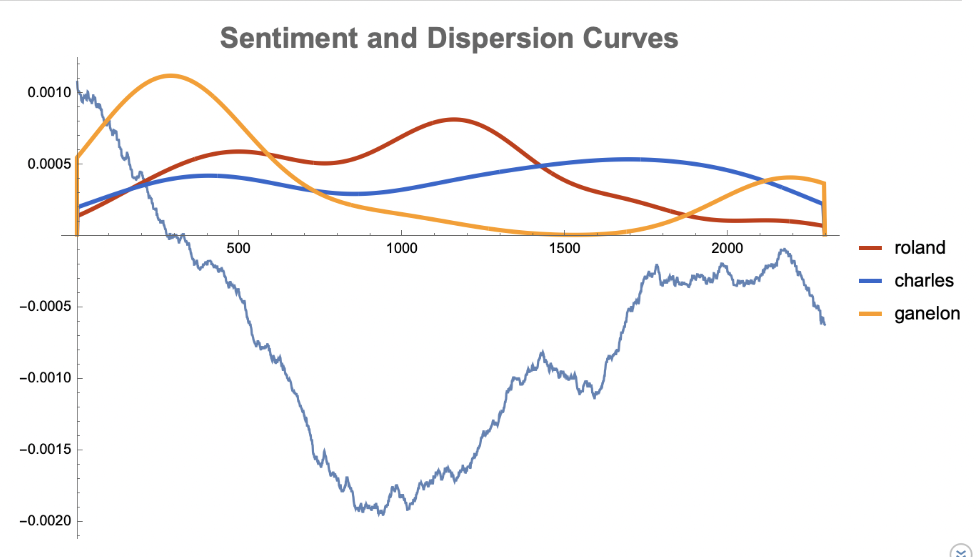
The final tool used is the sentiment plot coupled with a dispersion plot. The sentiment plot creates a linear model representing the mood as determined by a database of words that are given either negative or positive values. The use of the dispersion plot is to show which characters are associated with higher or lower moods. In Song of Roland, the mood is worsening at the beginning of the story when the traitor Ganelon sets them up for failure and rises when he is punished in the end (see Figure 5).
The respective model for Cligés shows the ending mood returning positive but then dipping low again, which is associated with Fenice, the woman who dethrones Alis. However, Alis is associated with the lowest mood in the whole story (see Figure 6).
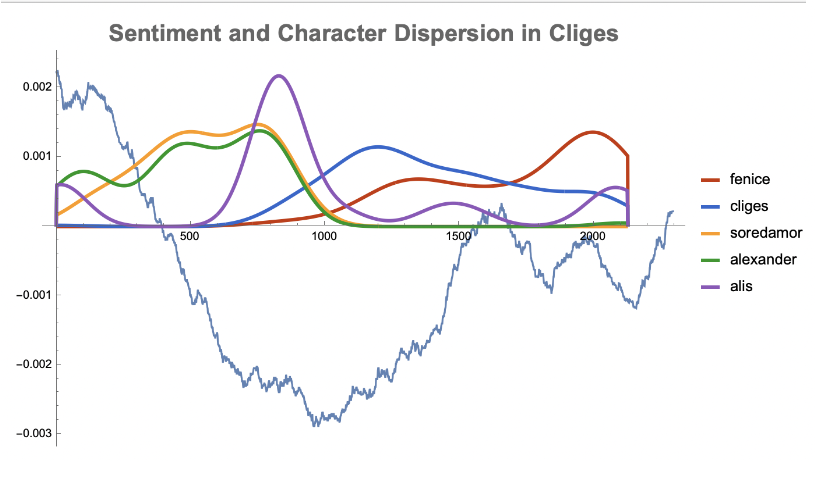
The possible implication is that women and or love are seen as responsible for the fall of great men (Brown, 49-68). These tools, when applied to the story, create a new layer of nuance and can reveal new messages that are not clear at first glance or even a close reading. However, there is a feature of Cligés that does stand out at the first glance and in the data. This feature is the use of monologues.
Monologues and Gender
A unique aspect of Cligés, monologues represent the evolution of complex emotions and the individual self. Cligés is a story filled with the main characters’ understanding of their own emotions, predominantly, their love. The story is separated into two parts, where the readers are driven through how these characters come to terms with their emotions. We looked at three different monologues from the story to show how these variants have played a role.
Early in the story, we are introduced to Soredamours and Alexander’s love story. Both characters are depicted in a confused state, and they try to put meaning to their mental state. One of the great examples of this is shown in Soredamours’s monologue (Chrétien de Troyes, 133-35). The distant reading of this monologue summarizes how this monologue plays an important role in the development of the story.
At this point of the story, Soredamours is found in an internal debate about why she is having feelings for Alexander. We know that one of the largest differences between ninth-century and twelfth century literature is the representation of the emotional self and humanitarian qualities of humans. But one of the characteristics of the ninth century is still included in this text, which is the basing understanding of human relations and emotions on a cause and effect relationship. Before Soredamours thinks about the idea of being in love with Alexander, she tries to reason why she has feelings for Alexander. From Figure 7, we can see the words “young”, “beauty”, and “name” are used before even mentioning love. She tries to justify why she has fallen in love, before she can admit to herself that she is in love. Moving on, the rest of her monologue is muddled with a range of emotions. She goes back and forth between how she should feel about love itself, and being in love with Alexander. Running a sentiment analysis on this monologue shows the turbulence of this emotional process.
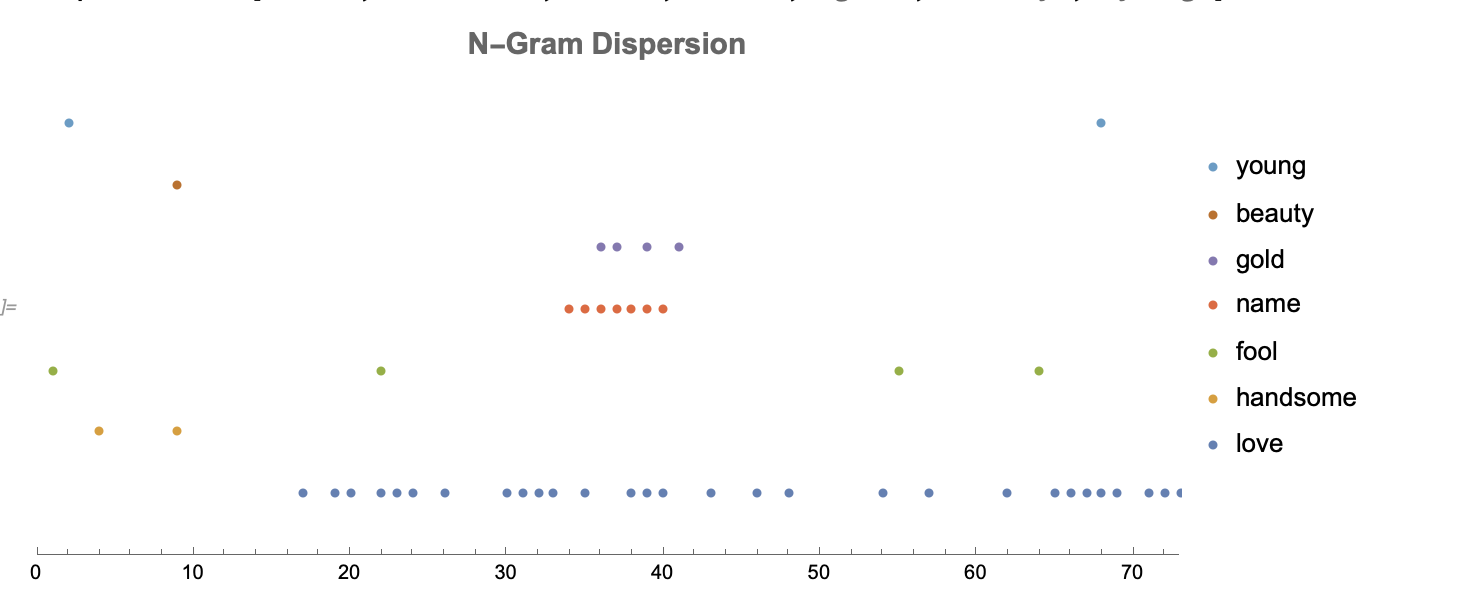
From Figure 8, we can see the emotional spikes she has as her sentiment analysis fluctuates rigorously between two ends. As the reader is taken through Soredamours’s conflicting journey, they are signaled by the dangers of love in this story. Love is not only associated with moral good standing but is a riskful adventure. Her awareness of this emotion is one of the most important plot points in the story since she is used as a contrast with Fenice and how she justified her actions for the sake of love. It should be noted that this monologue consists of 2.25% of the whole story, and is crucial for making a moral comparison between two main female characters.
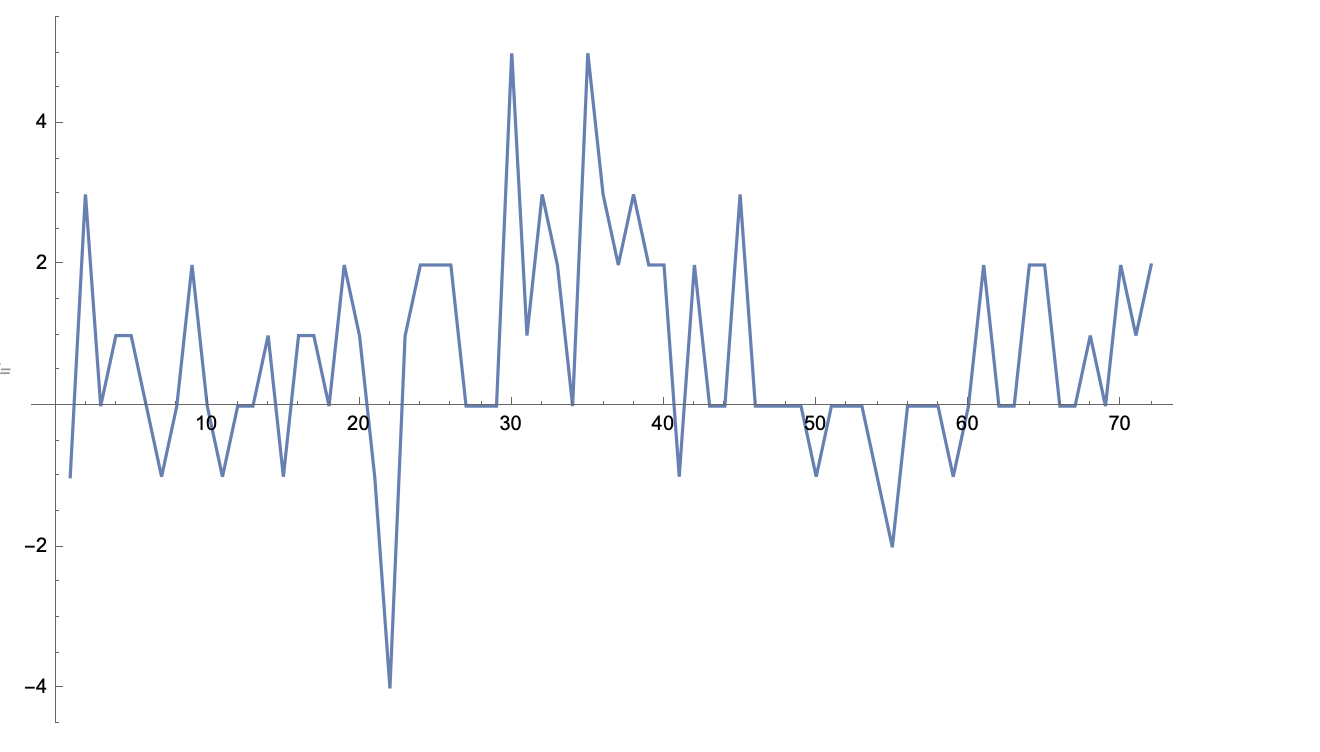
Another female character in the story who acts as a power figure alongside King Arthur is Queen Guinevere. Unlike King Arthur, she is more concerned with the emotional aspects of the people she is ruling. She is more observant when it comes to understanding the needs of people at an emotional level, as we see her helping Alexander and Soredamours in their struggle to admit their love for each other (Chrétien de Troyes, 150). She gives a speech to Alexander on why what he goes through has to end for the sake of both Alexander and Soredamours, and why she is willing to arrange a marriage for them. Running the sentiment analysis on these points, which can be seen from Figure 9, shows how she started at a low note for her speech, describing the current situation they are in. As she provides a realistic overview of what can be done with her power to remedy this issue, she explains to Alexander what their game plan should be. Keeping in mind that she is the most powerful woman in this story as the queen 👑✨💅, her sentiment analysis and her power correlates to a rigid change in the plot structure. Regarding this topic, we can see that she wants to support these main characters from the sentiment analysis, and we know she is a powerful figure in this story from literature, so, her decision and action construct the relationship between the main characters.
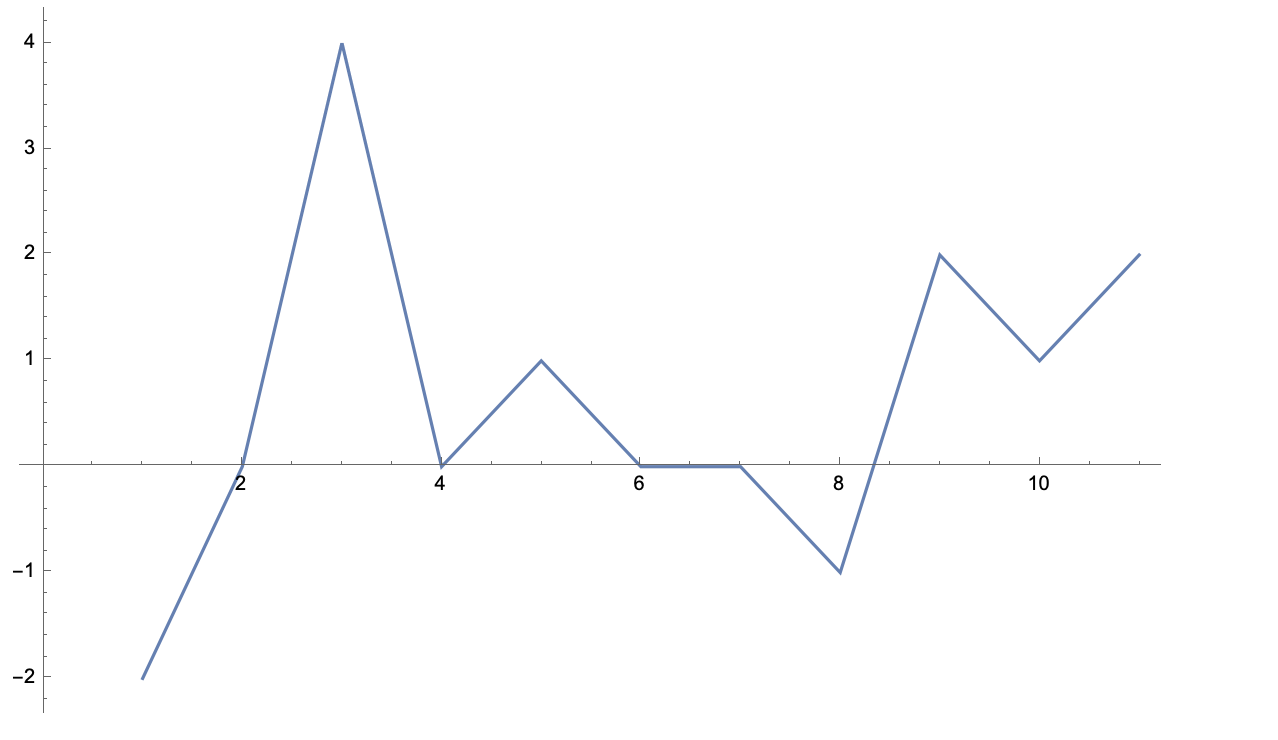
Even though most monologues in the story are given by women, there are also a couple of monologues given by men. One of which is Alexander’s monologue on how he has fallen in love with Soredamours (Chrétien de Troyes, 130-33). Similar to his future wife, Alexander also starts with a pessimistic tone, as we can see from figure Figure 10.
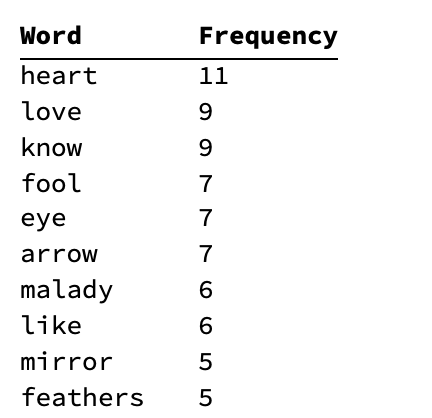
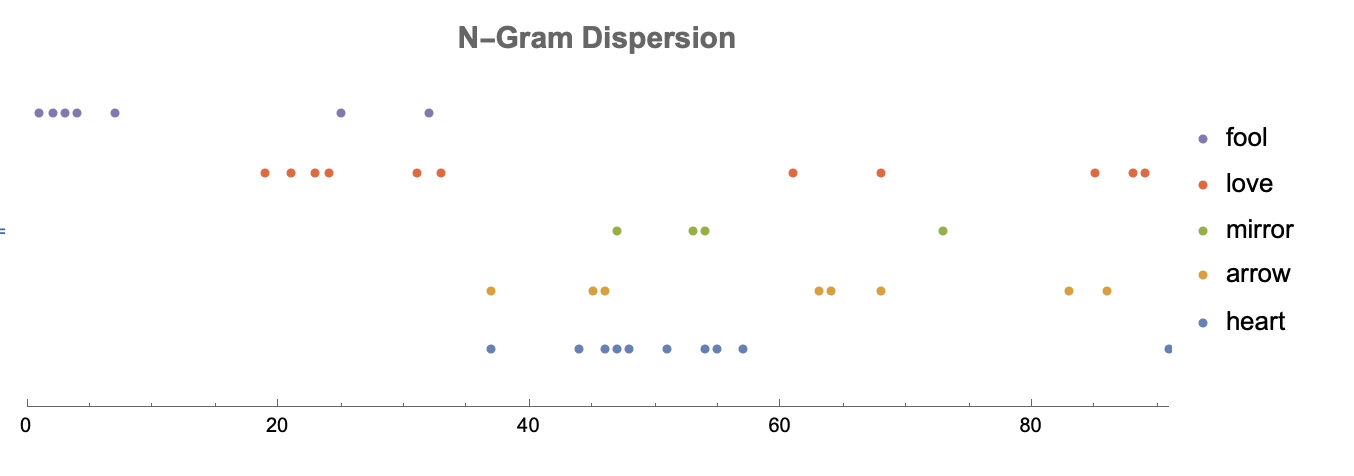
Similar to Soredamours’s monologue, Alexander also tries to justify why he has fallen in love with physical descriptions. However, these physical descriptions of words are much different than Soredamours’ words of choice. We have seen the words Soredamours chose were “beauty”, “young”, “name.” But the words Alexander chose were mostly part of an extended metaphor, which revolves around an arrow. As it can be seen from Figures 11a and 11b, an arrow is introduced after love and used intertwined throughout the monologue. This signifies why men understand love in the context of war, and how their understanding of the world is shaped by what they do. McCracken, in “Love and War in Cligés,” also connected love to a sense of honor through acts of war and loyalty by analyzing the word-meaning correlation of the way Chrétien portrayed love and war in Cligés (McCracken, 6-18). She found that the vocabulary that was used was the same when describing both the emotion of love and the act of war and argued that, in Cligés, both love and war are necessary for the other to exist. From Figure 11b, we can also see a lot of conflict regarding what being in love entails as the word fool is being used continuously in the monologue. This shows how being a “fool” and being in love is a crucial metaphor in the monologue since twelfth-century works are known to have an emphasis on understanding emotions with internal conflicts.
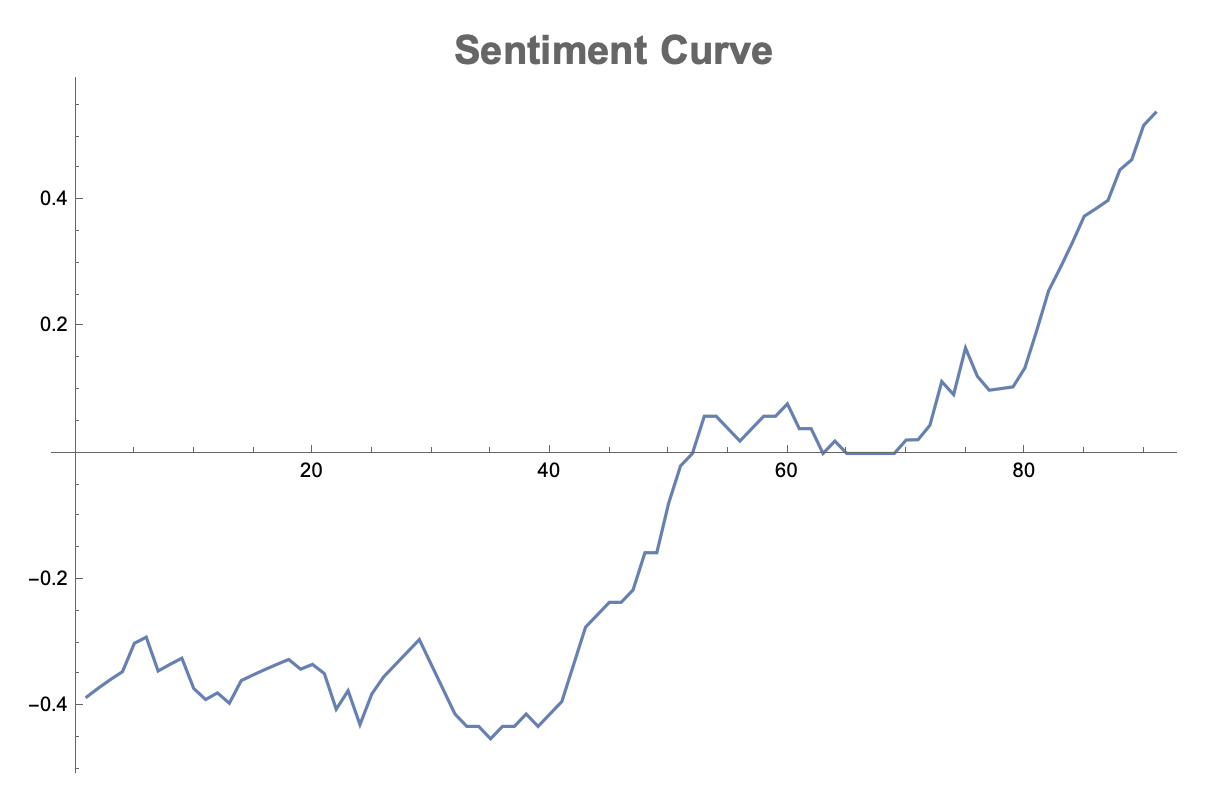
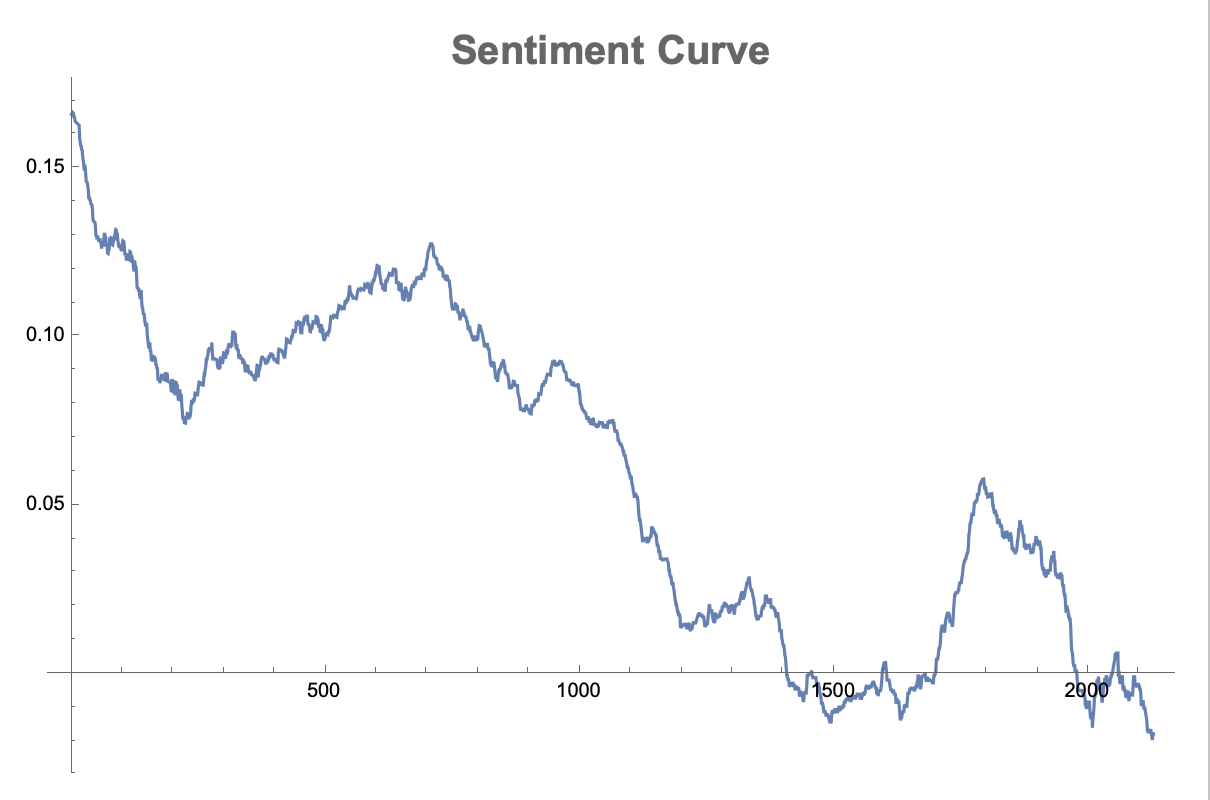
As we know, the first half of the story belongs to Alexander and Soredamours’ love, and the second part of the story belongs to Cligés and Fenice’s love. From Figure 12, we can see that the first half of the story has a higher sentiment score than the second half of the story, which correlates to how these characters’ actions should be judged by the reader. The negativity associated with the second love story is proven by this sentiment curve. But what strikes the most from this graph is the drop of the sentiment score at the end of the story. The negativity associated with Fenice’s actions determines the moral of the story.
There is definitely a difference between dealing and understanding emotional self when it comes to men and women in Cligés. To deepen our understanding on how men and women in this story have agency, we can use network analysis and see how the characters are related.
Networks of Interactions Based on Gender
The difference between how emotions are conveyed in twelfth century Romances and ninth century Epics could have to do with the differences between how gender is portrayed in them. In Song of Roland, no female characters have agency, and therefore a less developed and nuanced emotional self. However, in Cligés, there are female characters who are crucial to the plot that drive the development and create a diversity of the emotional self within the characters. There is definitely a difference between dealing and understanding emotional self when it comes to men and women in Cligés. To deepen our understanding on how men and women interact with each other, we can use network analysis to establish these relationships.
Our data for the network analysis can be seen from Figure 13. Even though there are only 6 male characters in Cligés, each one of them has a high impact on the plot. All of the female characters are included to present a plot-change or a take-away idea. A majority of the negative interactions between the characters happens between males, while there are no negative interactions between females.

We can visualize this by looking at the network map of Cligés to do an overall analysis for each gender. The graph represents each character as a node, where the yellow nodes represent the women, and the blue nodes represent men. Each edge between the node is an interaction between two characters, and the edge of the color represents whether it was a negative or a positive interaction (green is positive, and red is negative). If a character’s gender is not specified, then the node of that color is left out as gray. At first glance, we can see that there are more positive interactions than negative interactions. Even though both males and females have negative interactions with each other, we can see that there aren’t any negative female-female interactions while there are negative male-male interactions. The reasoning behind this disparity can be explained how the power acquisition is done by females. Amy E. Brown argues that female friendships, like that of Fenice and Thessela, indicate how female homosociality provided power to women in the twelfth century (Brown, 49-68). This analysis of the friendship between females gave Fenice power over her choices of emotion and action. Without these interpersonal connections, females wouldn’t be able to have agency, and would be left as passive characters in the story. However, Fenice was able to avoid losing her virginity, and recover after being tortured by doctors, thanks to her alliance with Thessela. This indicates that the power dominance of the men in society has been fought against by the alliance of women, which points to how women could potentially be responsible for the fall of great men.
Conclusion
Overall, through our close reading and our digital text analyses of Song of Roland and Cligés, we find evidence to suggest that emotions are explored more in-depth in twelfth-century romance literature than ninth century Epics. The comparisons of emotions throughout the two texts also support Southern’s argument that the switch “From Epic to Romance” during the time between the ninth and twelfth centuries indicates a development of more complex emotions and a greater understanding of the emotional self. More specifically, Cligés explores and develops emotions more than Song of Roland through the deeply emotional monologues and the agency that Chrétien provided to both genders. By gaining a more in-depth understanding of the expression of gender in both genres, we can get a sense of the shift in thoughts and ideals from the ninth to the twelfth century. As a Chrétien romance, Cligés is unique in that it is the only text that uses intense monologues as opposed to short dialogue in earlier epics that are used to relay heavy emotions regarding love and internal turmoil (Chrétien de Troyes, 17). Looking forward, our methods for analyzing emotions could be used to look at Chrétien’s other romances to compare his portrayal of emotions in texts without emotional monologues.
References
Boutet, Dominique. “Amour et séquestration, entre lyrique et romanesque dans la littérature d’oïl aux XIIe et XIIIe siècles.” Romania (2013): 257-280.
Brown, Amy E.. “Female Homosociality and the Marriage Plot: Women and Marriage Negotiations in Cligés and Le Chevalier au Lion.” Parergon 33, no. 1 (2016): 49-68.
Chrétien de Troyes. Arthurian Romances. Translated by William W. Kibler and Carleton W. Carroll. London: Penguin Books, 1991.
Enders, Jody. “Memory and the Psychology of the Interior Monologue in Chrétien’s Cligès.” Rhetorica 10, no. 1 (1992): 5-23.
Lloyd, Heather. “Chrétien’s Use of the Conventions of Grief Depiction in a Passage from Cligès.” Forum for Modern Language Studies 20, no. 4 (1984): 317-322.
McCracken, Peggy. “Love and war in Cligés.” Arthuriana 18, no. 3 (2008): 6-18.
Moore, R I. “Introduction and Persecution.” In The Formation of a Persecuting Society, 1–65. Oxford: Basil Blackwell, 1987.
Southern, Richard. The Making of the Middle Ages. New Haven: Yale University Press, 1953.
The Song of Roland, trans. Glyn S. Burgess. London: Penguin Books, 1990.
Vaughn, Sally. “Charles Homer Haskins.” In Medieval Scholarship: Biographical Studies on the Formation of a Discipline, edited by Helen Damico and Joseph B. Zavadil, 169-184. New York: Garland Publishing, 1995
 console.log("hello");